Helicobacter Pylori Test
 DOWNLOAD BROCHURE
Helicobacter Pylori Testing at Dr. Dangs Lab
If you often experience acidity after meals, bloating that just won't go away, or a nagging burning sensation in your upper stomach, it might not just be "something you ate."
These could be signs of an H. pylori infection—a common bacterial condition that affects nearly 50% of the world's population.
Many people mistake it for simple indigestion or blame it on stress or spicy food, but the root cause may be a hidden bacterial infection.
What is Helicobacter pylori (H. pylori)?
H. pylori is a spiral-shaped bacterium that colonizes the stomach lining. It is usually acquired during childhood and can remain undetected for years. If left untreated, it can lead to:
- Chronic gastritis
- Peptic ulcers (painful sores in the stomach or small intestine)
- Persistent acid reflux
- And in some cases, even gastric cancer
It's a silent troublemaker—many people don't realize they're infected until symptoms become chronic or complications arise.
Why You Might Need an H. pylori Test
Have you been taking antacids or home remedies frequently without long-term relief?
Do you feel bloated after small meals, experience frequent burping, or suffer from upper stomach discomfort, even when your diet seems fine?
These could be signs of an active H. pylori infection.
If you're constantly reaching for digestive tablets or skipping spicy foods because of "acidity," it's time to dig deeper.
Symptoms to Watch For:
- Recurring bloating or gas
- Heartburn or acidity (especially at night)
- Frequent burping or reflux
- Upper abdominal pain
- Loss of appetite
- Nausea or vomiting
- Bad breath (halitosis) despite oral hygiene
- IBS-like symptoms
- Fatigue without a clear cause
- Unexplained weight loss
These symptoms can interfere with your quality of life—from disrupted sleep due to acid reflux to feeling uncomfortable at work after meals.
Tests for Helicobacter pylori at Dr. Dangs Lab
We offer scientifically validated and non-invasive tests to detect active or past H. pylori infection. Tests are recommended based on your symptoms, history, and your physician's guidance.
1. Urea Breath Test (UBT)
Exclusively at Dr. Dangs Lab – Appointment Required
The UBT is the gold-standard, non-invasive test to diagnose active H. pylori infection.
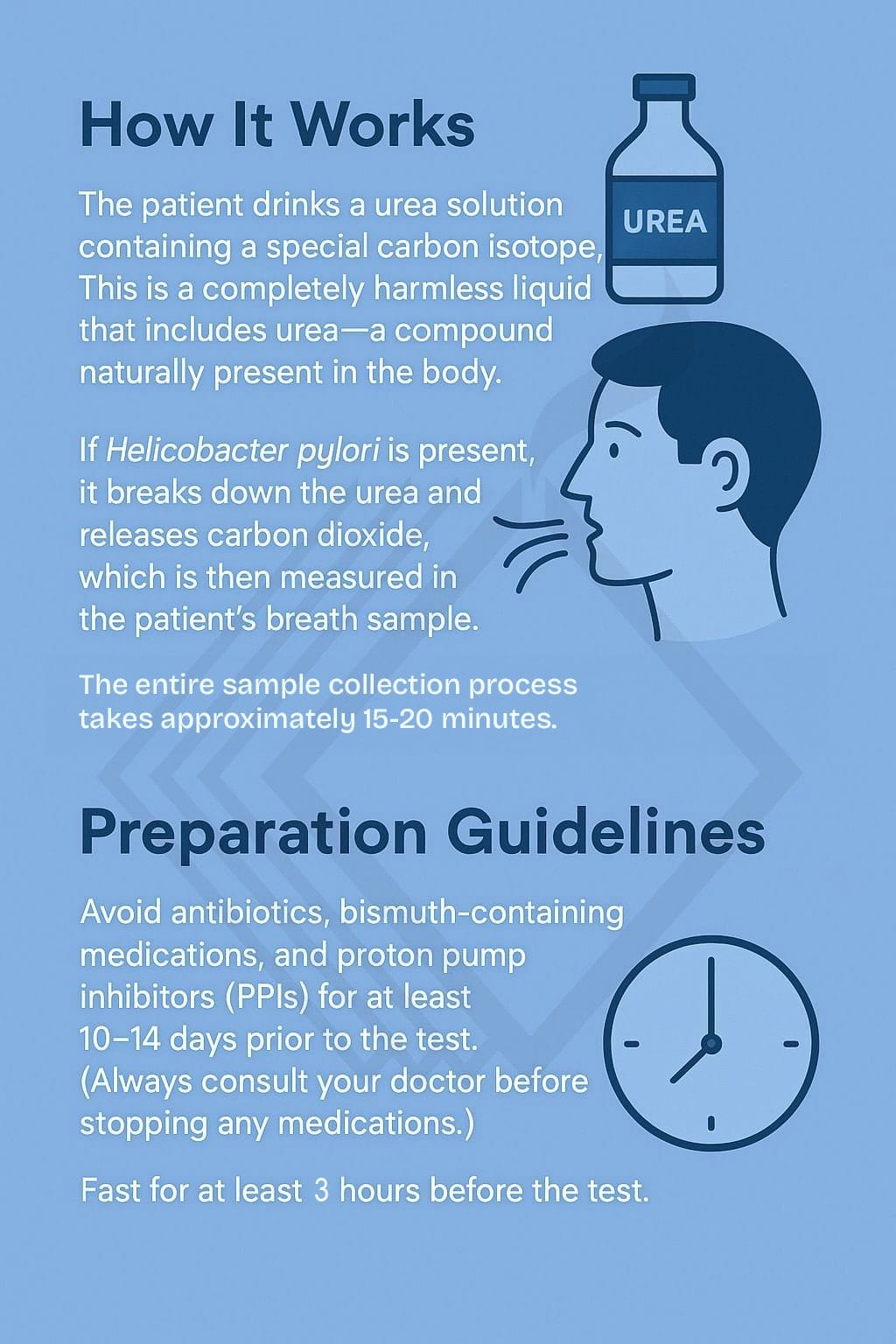
How It Works
The patient drinks a urea solution containing a special carbon isotope. This is a completely harmless liquid that includes urea, a compound naturally present in the body.
If Helicobacter pylori is present, it breaks down the urea and releases carbon dioxide, which is then measured in the patient's breath sample.
The entire sample collection process takes approximately 15–20 minutes.
No blood tests, no discomfort—just a simple drink and breath sample. It's like doing a health check with a sip and a breath.
Preparation Guidelines
- Avoid antibiotics, bismuth-containing medications, and proton pump inhibitors (PPIs) for at least 10–14 days prior to the test.
(Always consult your doctor before stopping any medications.) - Fast for at least 3 hours before the test.
Preparing well helps ensure the test results are accurate—think of it like preparing for a fitness test for your stomach.
Why Choose This Test?
- Highly accurate: >95% specificity and ~90% sensitivity
- No needles or blood draw
- Ideal for children and adults
- Suitable for initial diagnosis and post-treatment confirmation
It's often the first choice for patients who want fast, painless, and highly reliable answers.
Reference: Chey WD, Wong BC. Am J Gastroenterol. 2007;102(8):1808–1825.
🔗 View study on PubMed
Other options for H. Pylori Testing:
2. Stool Antigen Test
Detects the presence of H. pylori antigens in a stool sample, indicating active infection.
Why Choose This Test?
- Non-invasive and simple
- Effective for both diagnosis and monitoring treatment success
- Great option when a breath test is not feasible
Especially helpful for children or elderly patients who prefer avoiding breath or blood-based testing.
3. Blood Antibody Tests (IgG, IgA, IgM)
Detects antibodies (immune response) to H. pylori. These may indicate past or recent exposure, but do not differentiate active from old infection.
Use Case:
- Helpful as a screening tool
- Not reliable for post-treatment confirmation
- Less accurate than breath or stool tests
- A good option when doing a full health panel or if you need supporting information for a clinical evaluation.
Why Dr. Dangs Lab?
With over 4 decades of clinical excellence, Dr. Dangs Lab is trusted by physicians and patients across India.
We provide:
- Exclusive breath testing facility with trained staff
- Internationally validated test protocols
- Home sample collection across Delhi NCR and India
- Pathologist-led reporting for diagnostic accuracy
- End-to-end assistance with test preparation and follow-up
We don't just collect samples—we interpret them with expertise and care to guide your next medical step.
How to Book Your Test
- Call our helpline or visit Dr. Dangs Lab
- Select your preferred H. pylori test
- Choose between lab testing or home collection
- For the Breath Test, please schedule your appointment in advance and collect the test kit from the lab.
Also Known As
- H. Pylori Urea Breath Test
- Helicobacter Pylori Breath Test
- Pylori, Helicobacter Breath Test
- Ulcer Breath Test
- Urea Breath Test
- UBT
- (13)C Urea Breath Test
Frequently Asked Questions (FAQs)
1. Can I eat or drink water before the H. pylori breath test?
No. You should fast for at least 6 hours before the breath test—this includes no food or water. Fasting ensures the results are accurate and not affected by recent intake.
2. Do I need a doctor's prescription for the H. pylori test?
While a prescription isn't mandatory for most tests, it's highly recommended to consult your doctor first. They can help choose the most appropriate test based on your symptoms and history.
3. How soon will I get my test results?
- Breath test results are typically available within 72 hours.
- Blood antibody test results may also be available within a day.
Our team will notify you once your reports are ready.
4. Can H. pylori go away on its own without treatment?
No. H. pylori infections usually require a specific combination of antibiotics and acid-suppressing medications. Ignoring the infection can lead to ulcers, chronic gastritis, or even stomach cancer over time.
Still Have Questions?
Whether you're confused about which test is right for you or just need help preparing, our team is here to guide you every step of the way.
Early detection can make all the difference. Let's prioritize your gut health—together.